
Essential Guide to Custom Drone Parts Manufacturing with 3D Printing

Drones have transformed many industries, from agriculture to filmmaking. As drone technology advances, the demand for custom parts grows. Traditional manufacturing methods often struggle to keep up with the need for quick, affordable, and precise customization. This is where 3D printing steps in, offering a flexible solution for producing custom drone parts. This guide explains what you should know about manufacturing drone components using 3D printing, helping you understand the benefits, challenges, and practical tips for success.

Why Choose 3D Printing for Custom Drone Parts
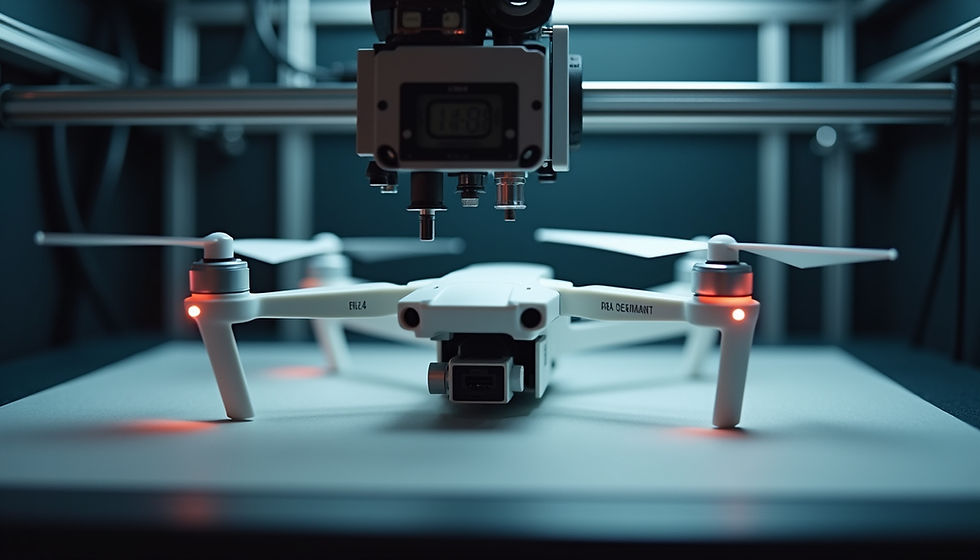
3D printing, also known as additive manufacturing, builds parts layer by layer from digital models. This process offers several advantages for drone part manufacturing:
Speed: Prototypes and final parts can be produced faster than traditional methods like injection molding or CNC machining.
Cost-effectiveness: Low-volume production runs become affordable since there are no expensive molds or tooling.
Design freedom: Complex shapes and internal structures can be created without extra cost or difficulty.
Customization: Parts can be tailored to specific drone models or unique user requirements.
For example, a drone enthusiast might need a lightweight camera mount designed to fit a particular drone frame. With 3D printing, this mount can be quickly designed, printed, and tested without waiting weeks or paying high setup fees.
Common Materials Used in 3D Printing Drone Parts
Choosing the right material is crucial for drone parts, which must balance strength, weight, and durability. Some popular materials include:
PLA (Polylactic Acid): Easy to print and biodegradable, but less heat-resistant and durable.
ABS (Acrylonitrile Butadiene Styrene): Stronger and more heat-resistant than PLA, suitable for structural parts.
Nylon: Offers excellent strength and flexibility, ideal for parts that need to absorb impact.
Carbon fiber reinforced filaments: Lightweight and very stiff, perfect for frames and arms.
PETG (Polyethylene Terephthalate Glycol): Combines strength and flexibility, resistant to moisture.
Each material has trade-offs. For instance, carbon fiber filaments provide strength but can wear down printer nozzles faster. Nylon is tough but requires careful printing conditions to avoid warping. Selecting the right material depends on the part’s function and the drone’s operating environment.
Designing Parts for 3D Printing
Designing drone parts for 3D printing requires understanding the technology’s strengths and limitations. Here are key design tips:
Optimize for weight: Use hollow structures or lattice infills to reduce weight without sacrificing strength.
Consider layer orientation: Parts are stronger along the layers than across them, so orient designs to handle stress accordingly.
Add mounting points: Include holes or slots for screws and attachments to fit the drone frame.
Test fit and function: Print prototypes to check dimensions and performance before final production.
Software like Fusion 360, SolidWorks, or free tools like Tinkercad can help create precise 3D models. Many drone hobbyists share designs online, which can be customized and printed.
Challenges in 3D Printing Custom Drone Parts
While 3D printing offers many benefits, it also comes with challenges:
Surface finish: Printed parts often have visible layer lines and may require sanding or coating for smoothness.
Strength limitations: Printed parts may not match the strength of machined or molded components, especially under heavy loads.
Print size constraints: Desktop 3D printers have limited build volumes, restricting the size of parts.
Material costs: Specialty filaments like carbon fiber composites can be expensive.
Understanding these challenges helps set realistic expectations and guides decisions on when 3D printing is the best choice.
Practical Examples of Custom Drone Parts Made with 3D Printing
Many drone builders use 3D printing to create parts that are hard to find or expensive to buy:
Propeller guards: Lightweight guards protect propellers during flights in tight spaces.
Camera mounts: Custom mounts allow unique camera angles or fit non-standard cameras.
Landing gear: Shock-absorbing landing gear can be designed to fit specific drones.
Battery holders: Secure and balanced battery compartments improve flight stability.
For instance, a drone racing team might print custom aerodynamic body shells to reduce drag and improve speed. Another example is a photographer printing a gimbal mount tailored to their camera model.
Tips for Successful 3D Printing of Drone Parts
To get the best results, consider these tips:
Use high-quality filaments: Cheap materials can lead to weak or brittle parts.
Calibrate your printer: Ensure accurate dimensions and good layer adhesion.
Print test pieces: Check tolerances and fit before printing full parts.
Post-process parts: Sand, paint, or coat parts to improve durability and appearance.
Keep spare parts: 3D printing allows quick replacement of broken components.
Experimenting with different designs and materials helps find the best combination for your drone’s needs.
The Future of 3D Printing in Drone Manufacturing
3D printing continues to evolve, with new materials and faster printers emerging. This progress will expand possibilities for custom drone parts, including:
Multi-material printing: Combining rigid and flexible materials in one part.
Metal 3D printing: Producing strong, lightweight metal components.
On-demand manufacturing: Printing parts locally to reduce shipping time and costs.
As these technologies develop, custom drone manufacturing will become more accessible and efficient.

Comments