
Step-by-Step Guide to Manufacturing Industrial Robot Arms: From Design to Production

Manufacturing industrial robot arms involves a combination of design, material selection, and precise production processes.

Here's a step-by-step guide to help you understand the industrial robot arms process.
Step 1: Design and Prototyping
Define Requirements: Determine the robot arm's purpose, payload capacity, and workspace.
Create a Design: Use CAD software to design the robot arm's structure, joints, and actuators.
Prototype and Test: Create a prototype to test and refine the design.
Step 2: Material Selection
Choose Materials: Select materials that meet strength, durability, and weight requirements, such as aluminium, steel, or carbon fiber.
Consider Factors: Consider factors like corrosion resistance, thermal conductivity, and cost.
Step 3: Production Processes
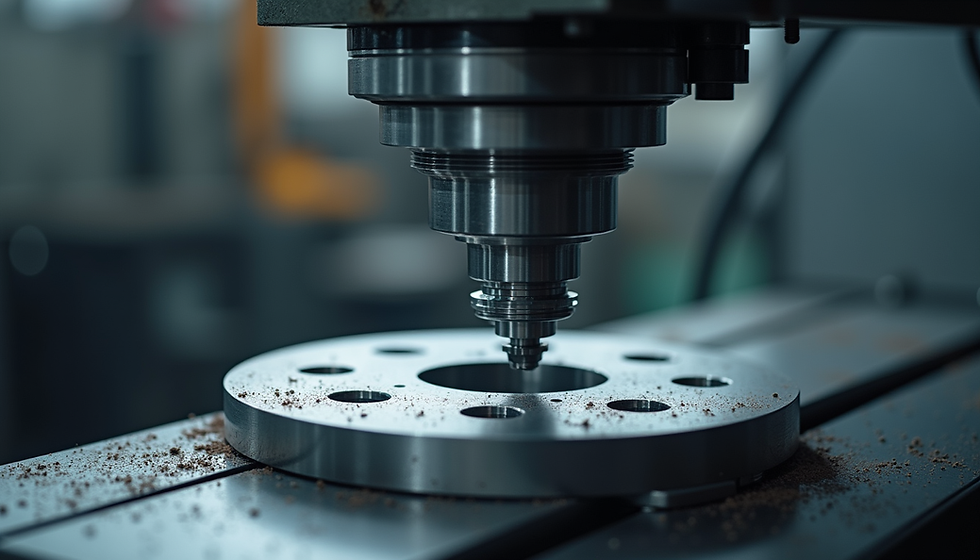
CNC Machining: Use CNC machining to create precise components, such as joints and actuators.
3D Printing: Use 3D printing to create complex geometries and customized components.
Assembly: Assemble components, including motors, gears, and sensors.
Step 4: Quality Control and Testing
Inspect Components: Inspect components for accuracy and quality.
Test the Robot Arm: Test the robot arm's performance, including movement, precision, and payload capacity.
Calibrate and Fine-Tune: Calibrate and fine-tune the robot arm for optimal performance.
Step 5: Final Assembly and Integration
Integrate Control Systems: Integrate control systems, including software and hardware.
Connect to Power and Communication Systems: Connect the robot arm to power and communication systems.
Final Testing and Validation: Perform final testing and validation to ensure the robot arm meets requirements.
Conclusion
Manufacturing industrial robot arms requires careful design, material selection, and production processes. By following these steps, you can create high-quality robot arms that meet specific requirements and applications.
Comments